
Michigan Affidavit of Service — What Courts Expect & What Wins Challenges
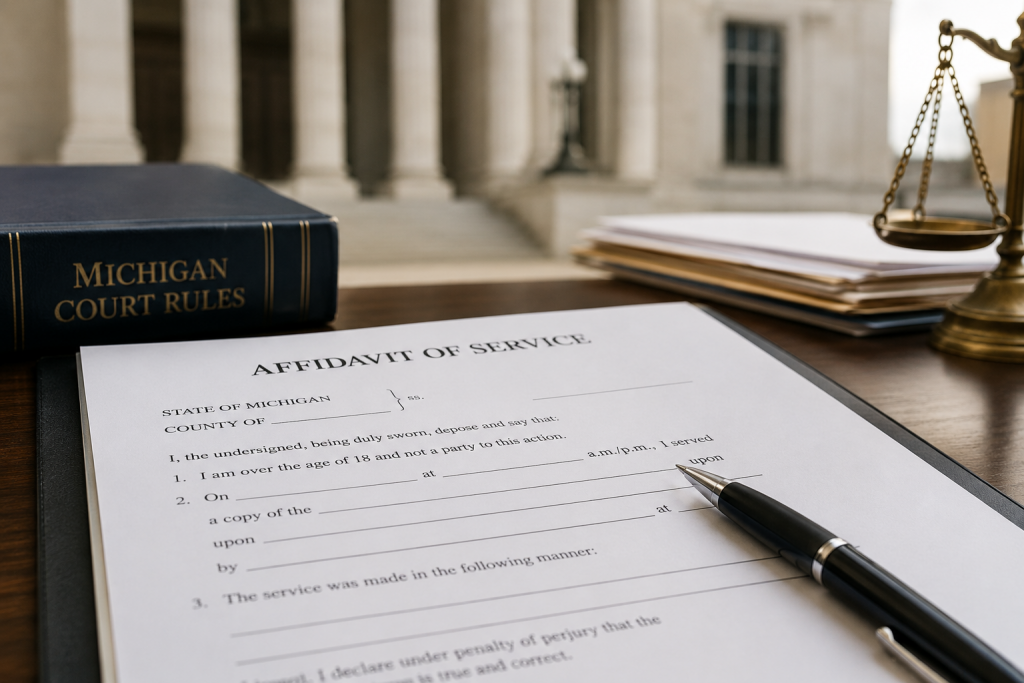
In Michigan civil litigation, proof of service is governed by Michigan Court Rule 2.104. Affidavits that lack clarity, specificity, or documented diligence can result in motions to quash, jurisdictional challenges, re-service orders, or litigation delays.
Michigan Civil Process Service (MICPS) prepares court-defensible affidavits supported by verified attempt records, precise timelines, and service narratives aligned with Michigan judicial expectations.
What Michigan Courts Expect in an Affidavit (MCR 2.104)
A compliant affidavit typically documents:
- Who was served (identity confirmation)
- Date and time of service
- Exact service location
- Method of service used
- Physical description or identifying confirmation when relevant
- Evidence of reasonable diligence when personal service is difficult
Courts evaluate affidavits based on:
- Internal consistency
- Level of factual detail
- Credibility of attempts
- Procedural accuracy
What Weak Affidavits Commonly Get Wrong
- Vague timing (“sometime in the afternoon”)
- Incomplete identity confirmation
- Boilerplate language without case-specific facts
- Poor diligence documentation
- Missing attempt chronology
These weaknesses can delay proceedings or invite defense challenges.
How MICPS Strengthens Affidavit Defensibility
MICPS emphasizes:
- Verified attempt logs
- Multi-time attempt documentation
- Clear attempt chronology
- Location & subject intelligence when needed
- Professional narrative structure designed to withstand courtroom scrutiny
Request Michigan service with verified affidavits — 586‑203‑2868
Frequently Asked Questions
Can an affidavit of service be challenged in Michigan?
Yes. Courts may scrutinize affidavits lacking clarity or diligence documentation.
What strengthens affidavit credibility?
Specific timestamps, verified attempt history, identity confirmation, and procedural accuracy.